Interview
A View from the European Commission through the lens of Yves Le Lostecque
Former Head of the Sport Unit, European Commission; Former Head of the Erasmus Mundus and Sport Unit, EACEA
Profile
Yves Le Lostecque is an expert in EU sports policy, with a career spanning over three decades. He holds a Master’s degree in European Law from the University of Rennes. His professional journey began in the French Ministry of Youth and Sport, where he focused on developing sports and physical activities in the western regions of France, including his native Brittany.
In 1993, Mr. Le Lostecque joined the European Commission, initially working in vocational training. He soon returned to his passion, sport, and held various positions directly related to sports policy. Notably, he served as a lawyer in the Internal Market department, addressing issues such as the recognition of sports diplomas and the free movement of professionals within the EU.
From 2013 to 2021, Mr. Le Lostecque was the Head of the Sport Unit in the European Commission. During this period, he played a pivotal role in elevating the EU's engagement in sports, leading initiatives like the European Week of Sport and the #BeActive campaign. He was instrumental in fostering a collaborative relationship between the EU and the sports movement, transforming the Commission into a trusted partner rather than an adversary.
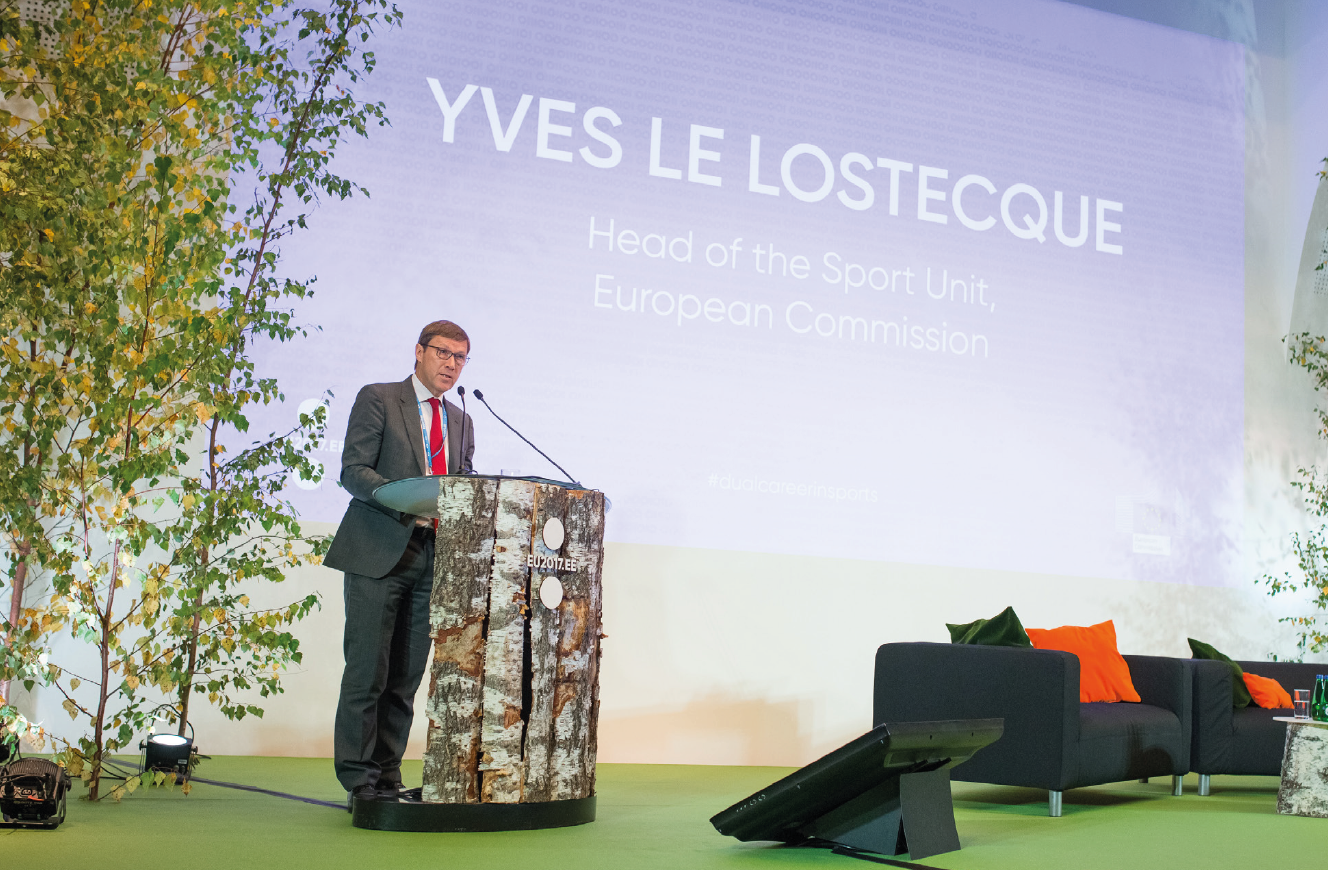
Photo: Kultuuriministeerium
In 2021, he transitioned to the European Education and Culture Executive Agency (EACEA) as the Head of the Erasmus Mundus and Sport Unit, overseeing the implementation of the Erasmus+ programme. In this capacity, he managed a sport budget of €70 million, supporting various projects that promoted grassroots sports, good governance, and social inclusion.
Mr. Le Lostecque retired in February 2024 but remains actively involved in EU sports activities. He continues to contribute his expertise to various initiatives, reflecting his enduring commitment to the development of sports policy in Europe.
Beyond his professional achievements, Mr. Le Lostecque is passionate about sports. He has participated in football, tennis, diving, and running, and now enjoys walking. His dedication to sports is not just a career but a lifelong passion.
Could you share some reflections on your professional career, highlighting key roles, accomplishments, and your contributions to the field of sport policy?
Even if, during my whole career, I occupied different positions in various environments, sport has been the common thread of my professional life. After having obtained my Master in European Law in 1980 at the University of Rennes, I started working for the French Ministry of Youth and Sport. I was in charge of the development of sport and physical activity in the western regions of France, including my native Brittany.
Following these seven rewarding years spent in the French national civil service, I joined the EU in 1993. At the European Commission, after starting in vocational training, I quickly returned to my preferred subject, sport. I therefore occupied various positions directly linked to sport. In particular, I spent four years as a lawyer in the department responsible for the Internal Market, where I was in charge of the recognition of sport diplomas. It was a challenging time, as I was involved in “battles” between some Member States concerning the free movement of ski instructors in the EU.
From 1999 to 2004, I worked as a policy officer in the Commission Sport Unit, at a time when there was no budget, no real policy, and no strong legal competence. Nevertheless, I very much enjoyed this period, when ideas were emerging to make sport an EU competence. This was finally achieved in 2007 when the Lisbon Treaty was signed on 13 December 2007 and entered into force on 1 December 2009.
It was this treaty that, for the first time, gave the European Union a specific competence in the field of sport through Article 165 of the Treaty on the Functioning of the European Union (TFEU).
I later returned as Head of the Sport Unit during the years 2013 - 2022. These were truly “golden years,” when sport developed significantly at EU level and many important structures were built. I finished my career in the EU institutions as Head of the Sport and Erasmus Mundus Unit at the EACEA (Education and Sport Executive Agency), where in my final year I managed a sport budget of €70 million.
On a personal basis, I am passionate about sport, even if I would have dreamed of being much better. I have practiced, or still practice, football, tennis, diving and running. Nowadays, I am more oriented towards walking!
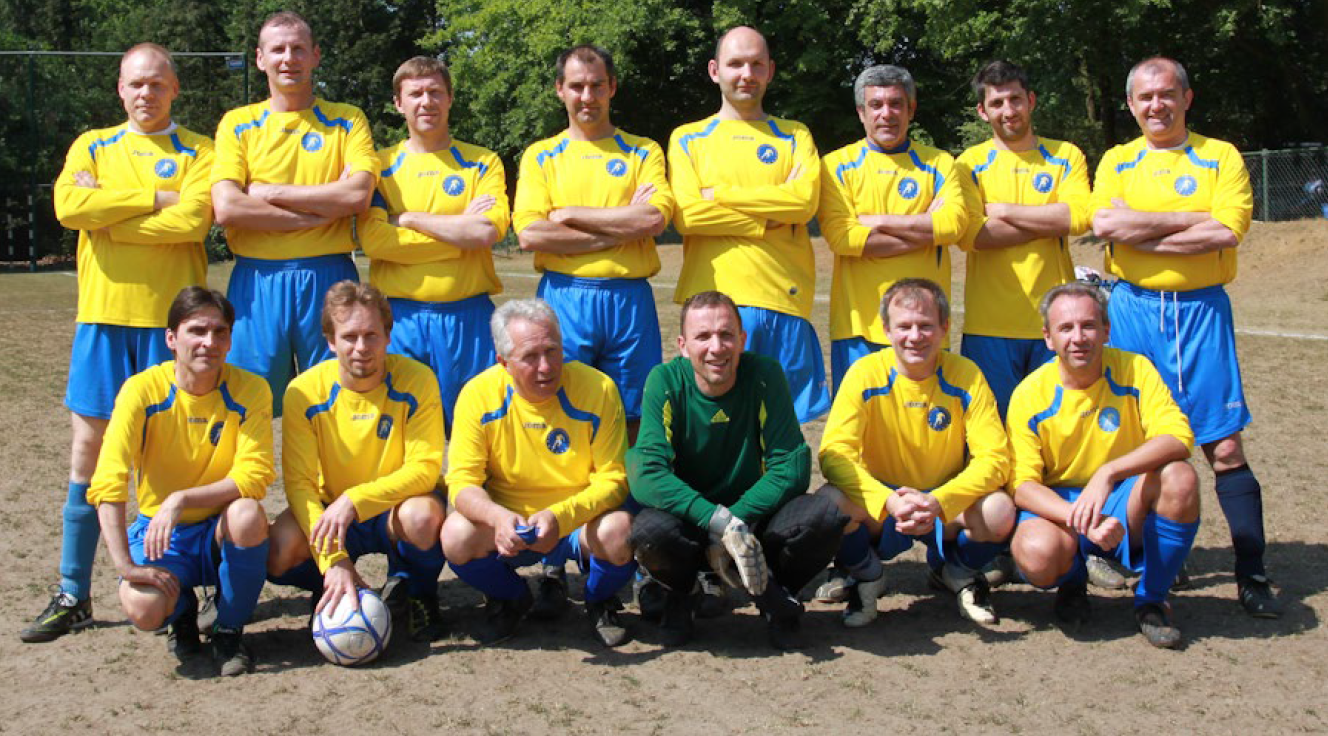
Photo: Yves Le Lostecque private collection
What are the key attributes that define your professional and personal interests, involvement in sports, leadership in initiatives, and broader engagement in the sector?
My greatest pride has been contributing significantly to the development of EU sport policy during my tenure as Head of the Commission Sport Unit. I was fortunate to be appointed to this position just after the Erasmus+ programme had been adopted and came into force. On this solid foundation, and with strong political support from the Commissioners and the Commission’s hierarchy, I was able to increase the prominence of sport within the EU.
Some of the main achievements during this period include the creation of the European Week of Sport and the launch of new initiatives such as the #BeActive and #BeInclusive awards. I also contributed to making the EU Sport Forum a “place to be” for the European sport movement. Similarly, the Sport Info Day became an important annual gathering in Brussels, where hundreds of sport organisations engage in dialogue with EU institutions at both political and technical levels.
Equally important was establishing an open, genuine, and productive dialogue with sport organisations. I remember the 1990s, especially after the Bosman case, when the European Commission was often seen as the “enemy” of sport. We have come a long way since then: today, the sport family and the Commission collaborate in a true spirit of partnership.
From your perspective, what have been the most significant achievements in EU sports policy over the past 15 years?
From the Commission’s perspective, the most significant achievement has been establishing the EU as an active and credible actor in sport policy. Years ago, due to the lack of legal competence and financial capacity, the EU was not really an interlocutor for sport organisations. The Lisbon Treaty completely changed this approach. Today, EU institutions and the sport movement know each other much better and cooperate rather than confront. In most cases, discussions with the EU now take place before major decisions are made by the sport movement when they have a European impact.
Another major achievement has been building a balanced and solid cooperation between the EU, Member States, and sport organisations. The European Commission is fully aware of its competences, its extensions, and its limits. In respect of the Treaty, permanent cooperation between Member States and the Commission is now firmly in place.
Furthermore, the possibilities offered by the Erasmus+ budget have allowed the Commission to provide substantial support to the sport movement through project funding. This has enabled partnerships with sport organisations and allowed the sport family to develop and implement creative ideas at the European level - a development that I consider particularly rewarding.
Photo: Kultuuriministeerium
How would you assess the overall success of the EU’s engagement in sport during this period?
My assessment is clearly positive. It is particularly significant that the European Commission is now seen not just as an interlocutor, but also as a partner of the sport movement. Even before the Lisbon Treaty, the EU had an important impact on the organisation of sport - for example, through the Bosman ruling in 1995, and discussions on transfers or nationality rules. Internal Market principles and competition rules had to be respected in the field of sport, shaping its regulation at a European level.
With the Lisbon Treaty, however, the Commission gained a deeper knowledge and understanding of sport’s true nature. Sport has specificities and cannot be regarded merely as an economic activity. This balanced approach guided my actions during my mandate as Head of the Sport Unit.
Cooperation with Member States has also evolved positively. Formally, it takes place in structures such as the Working Party on Sport and the meetings of sport ministers. Beyond this formal framework, the dialogue has multiplied. Today, Member States are key actors in the EU Sport Forum, which was not always the case in the past. All major initiatives are now coordinated and negotiated with Member States, reflecting a genuine spirit of partnership and collaboration.
What tangible and intangible outcomes have emerged from the policy papers approved under your leadership as Head of the Sport Unit at the European Commission? How have these influenced EU and national-level initiatives?
I am aware that Council Conclusions and many other documents adopted within the Council framework are not legally binding instruments. This can, of course, limit their impact, and this aspect has sometimes been criticized by the sport movement. However, these documents provide clear guidance on the priorities shaping EU action. They can also inspire further political initiatives and be supported through programmes such as Erasmus+.
All policy documents have their merits and strengths. They were adopted after long but constructive negotiations between Member States and the Commission, and all had an impact in one area or another. I would like to highlight several that I consider particularly important.
For instance, the Council Conclusions on Sport Diplomacy, adopted under the Slovak Presidency in 2016, were highly valuable. They supported the Commission, which at that time was developing this dimension of sport policy under the leadership of Commissioner Navracsics. Similarly, the Council Conclusions under the Bulgarian Presidency on promoting the common values of the EU through sport had a strong impact, as they led to the integration of values promotion into the Erasmus+ programme.
I also recall the 2017 Conclusions under the Estonian Presidency on further developing structured dialogue in sport. These made our dialogue with the sport movement more fluid and more efficient. Other notable examples include the Council Conclusions on Gender Equality in Sport under the Greek Presidency in 2014, which helped the Commission strengthen its efforts on gender equality within policy and programmes.
In 2012, the Council Conclusions on Health-Enhancing Physical Activity (HEPA), adopted under the Cypriot Presidency, marked the start of a process that focused the Commission’s attention on this area. Following these initial policy inputs, Council Recommendations on HEPA were adopted in 2013, and in the medium term, these efforts culminated in the adoption of the Tartu Call for a Healthy Lifestyle in 2017.
These documents - both tangible and intangible - have guided EU-level priorities, influenced national initiatives, and helped build a more structured, cooperative, and forward-looking sport policy framework across Europe.

Photo: Kairis Ulp private collection
In what ways has EU sports policy evolved during this time, and what key challenges have shaped its development?
I would say that the role of the EU in sport policy is now widely recognized. This recognition is based on a careful approach that respects competences and engages all relevant actors in dialogue. While EU sport policy is clearly focused on grassroots sport, its scope is not limited to this area alone.
Several challenges have shaped its development. Some are institutional: it is always a sensitive exercise to act in a field where competences are diverse and sometimes overlapping. Respect for competences, ongoing dialogue, and permanent cooperation are therefore decisive principles if we want to make progress.
Another challenge is the diversity of sport policies across Member States, which are often based on very different approaches. At EU level, we have worked to promote a European model of sport by emphasizing common points and developing them further. At the same time, we remain aware of the vast diversity of approaches among Member States and sport organisations.
Finally, the sport environment itself is changing rapidly, which requires constant adaptation. EU sport policy has evolved to be more responsive, inclusive, and cooperative, balancing respect for national differences with the promotion of shared European values in sport.
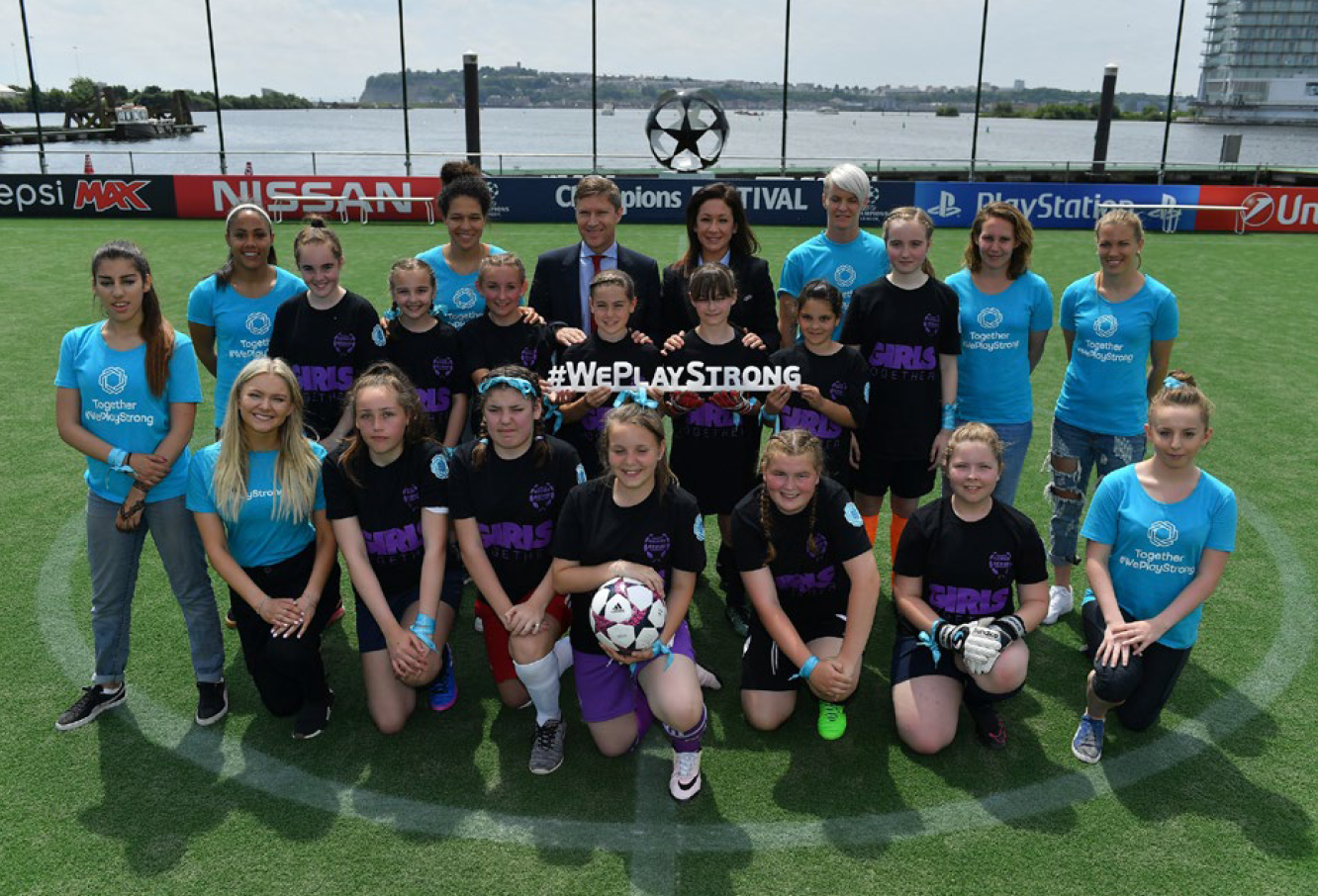
Photo: Yves Le Lostecque private collection
What progress has been made on presidency topics and the implementation of adopted policy documents during your tenure? What measurable impact has this had at the EU level, and how have national governments responded?
Progress has been continuous. Through discussions and negotiations, policy documents have consistently been adopted as planned. In the beginning, the choice of priorities was primarily the responsibility of the Member State holding the Presidency. Over time, however, Presidencies have become increasingly aware that these choices must be consensual; otherwise, negotiations can become very difficult, or the text risks being rejected - which, fortunately, never happened during my tenure.
Measuring the impact of these documents is always challenging, as they are not linked to a specific budget. Nevertheless, the Commission takes them into account when implementing programmes such as Erasmus+. At the national level, implementation depends largely on the goodwill of Member States. In my experience, however, EU policy documents are generally taken seriously and respected, reflecting a spirit of good cooperation.
The impact on the sport movement is more complex. One of the challenges has been to ensure that these documents are promoted, widely known, and eventually adopted by sport organisations. Here, the nature of the documents themselves presents a limitation: they are non-binding, providing guidance, advice, and suggested orientations, but without direct financial support. Despite this, they have played an important role in shaping discussions, aligning priorities, and supporting dialogue at both EU and national levels.
What measures or processes could strengthen the role of Chairs of the Council Working Party on Sport, particularly in fostering collaboration and ensuring continuity in policy implementation?
There is no miracle recipe, and, in fact, past Chairs have generally performed very well. The key lies in solid preparation with both the Member States and the Commission, supported by the Council services, which bring extensive experience of Council work. Respecting different approaches is also essential: not all Member States share the same philosophy or priorities, so finding a common understanding is crucial.
Good coordination with the trio of Presidencies is important, but engagement should extend beyond the trio as well. In terms of continuity, effective communication with the Commission is vital, since the Commission provides ongoing continuity. Moreover, the Commission can translate policy priorities into concrete documents and initiatives, including those with financial impact, which ensures that agreed priorities move from discussion to action.
Based on your experience as Head of the Sport Unit at the European Commission, what key lessons have you learned, and what specific recommendations would you offer to future Chairs to help them navigate the role effectively?
As I mentioned earlier, my first recommendation would be to begin preparations months, and sometimes even years, in advance. Careful planning is essential to ensure smooth coordination and productive negotiations.
Equally important is keeping in mind the scope of EU competences and the diverse approaches of Member States. Understanding these differences, respecting them, and finding common ground are key to effective leadership in this role. Balancing preparation, dialogue, and respect for diversity are lessons I have found to be fundamental for any future Chair navigating the complexities of the Council Working Party on Sport.