Interview
Profile
Viktoria Slavkova is a highly accomplished professional and executive with an extensive background in various industries. Currently based in Dubai, she travels frequently to Europe and East Africa. Viktoria is the CEO of Lab Intra, a Dubai-based company that exclusively represents manufacturers of medical devices for blood transfusion services and imaging from France, Germany, Turkey, and China in the GCC region and East Africa. Additionally, she holds the position of CEO at Best Luxury Boats, representing manufacturers of luxury boats from Italy and Greece for the UAE market.
Prior to her current roles, Viktoria served as the Director for International Cooperation at the Bulgarian Ministry of Youth and Sport from 2017 to 2022. In this capacity, she represented Bulgaria in various international organizations and bodies focused on sports-related topics such as anti-doping measures, integrity, safety of sports events, and good governance in the sector's recovery post-COVID-19. Her contributions include serving in key positions like Deputy Member of the World Anti-Doping Agency (WADA) Foundation Board for 2 mandates, Elected Member of the WADA Finance and Administration Committee, Chair of advisory group for International Cooperation, Member of the Bureau of the Enlarged Partial Agreement on Sport (EPAS) of the Council of Europe, Deputy Chair of the Intergovernmental Committee for Physical Education and Sport of UNESCO (CIGEPS), She was also appointed as the National Focal Point for UNESCO's International Convention against Doping in Sport. During this period Viktoria managed an international team for the organisation of major intergovernmental events in Sofia, Varna, Brussels, Strasburg and Vienna.
Before her involvement in international sports, Viktoria held positions at the Permanent Mission of Bulgaria to the UN and OSCE in Vienna. She also has experience as a Director of External Operations in a group of construction companies expanding across several European countries and as a manager of NGOs focusing on regional development and sports, collaborating with notable figures in the sport field.
Viktoria is a graduate of the Diplomatic Academy of Vienna and Vienna University of Technology, specializing in green diplomacy. She holds a Master's degree in Finance and has received a Placement Certificate in Innovation and Business Intelligence from Cherbourg School of Engineering. Fluent in English, German, Russian, and French, Viktoria's diverse skill set and experience make her a valuable asset in any organization.
What was the selection procedure for the chair of the WPS?
There was no specific internal procedure for the selection. The decision was based on background, educational qualifications, and professional experience in the field of sport and politics. These factors contributed to the selection, ensuring that the role was filled by someone with relevant expertise and a deep understanding of the subject matter.
Were preparations for your presidency important? If so, can you explain why?
Preparations played a crucial role in the success of the presidency. Assembling a team of experts, both internally and externally, ensured a well-structured and informed approach to key topics. Engaging a diverse network of specialists at national and international levels helped refine discussions and enhance decision-making. Additionally, securing the necessary activities and logistical support was essential for the smooth execution of the presidency’s agenda.
Participating in various meetings and training sessions in advance proved highly beneficial. These included WPS meetings, discussions with Member States, and engagements with the European Commission’s Sport Unit and the Council. Consultations with experts on the Presidency’s thematic priorities further strengthened the preparatory process.
One of the most valuable initiatives was learning from experts involved in previous Presidencies. Their insights, shared in collaboration with the European Commission, provided practical guidance on addressing challenges and meeting expectations. Both formal and informal meetings played an important role in shaping the strategy. Additionally, training provided by the local Institute for Public Administration and the Ministry of Foreign Affairs helped enhance the team’s readiness for the responsibilities ahead.
What was your personal perspective on the presidency?
Taking on the role of WPS Chair was both a challenging and motivating experience. I felt capable and truly driven to lead and coordinate our sports team during the presidency. Although it was a new experience with many unknowns, I was prepared to face those challenges and deliver on the responsibilities.
The presidency was capital-based, and one of the initiatives I introduced was inviting a broader range of experts to our events. This was positively received, with the European Commission recognizing it as a good practice.
A significant challenge was that this was our first time leading the presidency, which meant there were many unknowns and we sometimes had to improvise. Despite that, the lessons I learned were invaluable. I realized how crucial the involvement of the Council, the European Commission, Member States, and key stakeholders such as the EOC, universities, and organizations like UNODC, Europol, and WADA was for the success of the presidency.
The role also had a notable influence on my professional career. Due to my leadership during the presidency, I was invited to represent Bulgaria in various international organizations, including the Council of Europe, UNESCO, and the European Commission’s working groups. Additionally, I was given opportunities to speak and participate in panel discussions at sport-related events.
What are your reflections on 15 years of EU work in sport?
Over the past 15 years, there have been several significant achievements in EU sports policy. The establishment of a legal framework for sport has been crucial, as it provides clear guidelines for collaboration across EU member states. The creation of the Working Party on Sport has also been a landmark achievement, enabling structured discussions and coordination between EU institutions. Additionally, Erasmus+ Sport has been pivotal in fostering collaboration and supporting initiatives that promote sport and physical activity throughout Europe.
When evaluating the EU’s work in sport, I consider it a great success. There has been considerable progress, with initiatives and policies that have made a tangible difference in the sporting landscape across Europe.
However, there is always room for improvement. The presidency chairing and preparation process in sport could benefit from more interactions with previous presidencies. Peer-to-peer learning and practical experience sharing would provide invaluable insights, and appointing a mentor for each new presidency could offer great value.
For future WPS Chairs, I would recommend working more closely with their peers and not being afraid to tackle controversial topics. Embracing such challenges will allow for progress and innovation within the sporting sector.
What were the highlights of your presidency?
The highlights of the Bulgarian presidency were the various events we organized, particularly the DG Meeting and the conferences. These events were central to the presidency and played a crucial role in fostering meaningful discussions and collaboration among stakeholders.
I am glad to share with you some exclusive photos that define the presidency. They bring back great memories and remind me of the wonderful time I had during this important period.
How would you assess your cooperation with the European Commission?
The cooperation with the European Commission was excellent. The Sports Unit was instrumental, providing continuous support, assistance, and collaboration at every stage of the presidency. They played a key role in ensuring that everything ran smoothly and efficiently.
We developed joint activities with the Commission, mainly centred around the events we organized. These collaborative efforts helped strengthen our initiatives and enhance their impact.
Additionally, during our presidency, we hosted Commission-led events such as the EU Sport Forum and the Sport Info Day, which were essential for engaging stakeholders and promoting sport across Europe.
How would you evaluate the support from the Council Secretariat?
The support from the Council Secretariat was excellent as well. We had strong relations with the Secretariat, who provided valuable assistance throughout the presidency. They delivered training, offered guidance and advice, and responded swiftly to any questions we had, ensuring everything ran smoothly.
Joint activities with the Secretariat were primarily communicated through emails, but we also met in person in Brussels and had a few meetings in Sofia, which helped strengthen our collaboration. My primary contact within the Council Secretariat during the presidency was Kari Töllikkö, whose support was invaluable in helping us navigate various aspects of the presidency.
How did you collaborate within the Presidency Trio?
Our presidency trio partners were Estonia and Austria, and we had an excellent collaboration throughout the presidency. We met frequently, either in Brussels or at official presidency events held in each of the three countries. These meetings allowed us to align our efforts, ensuring a coordinated and unified approach to all activities during the presidency.
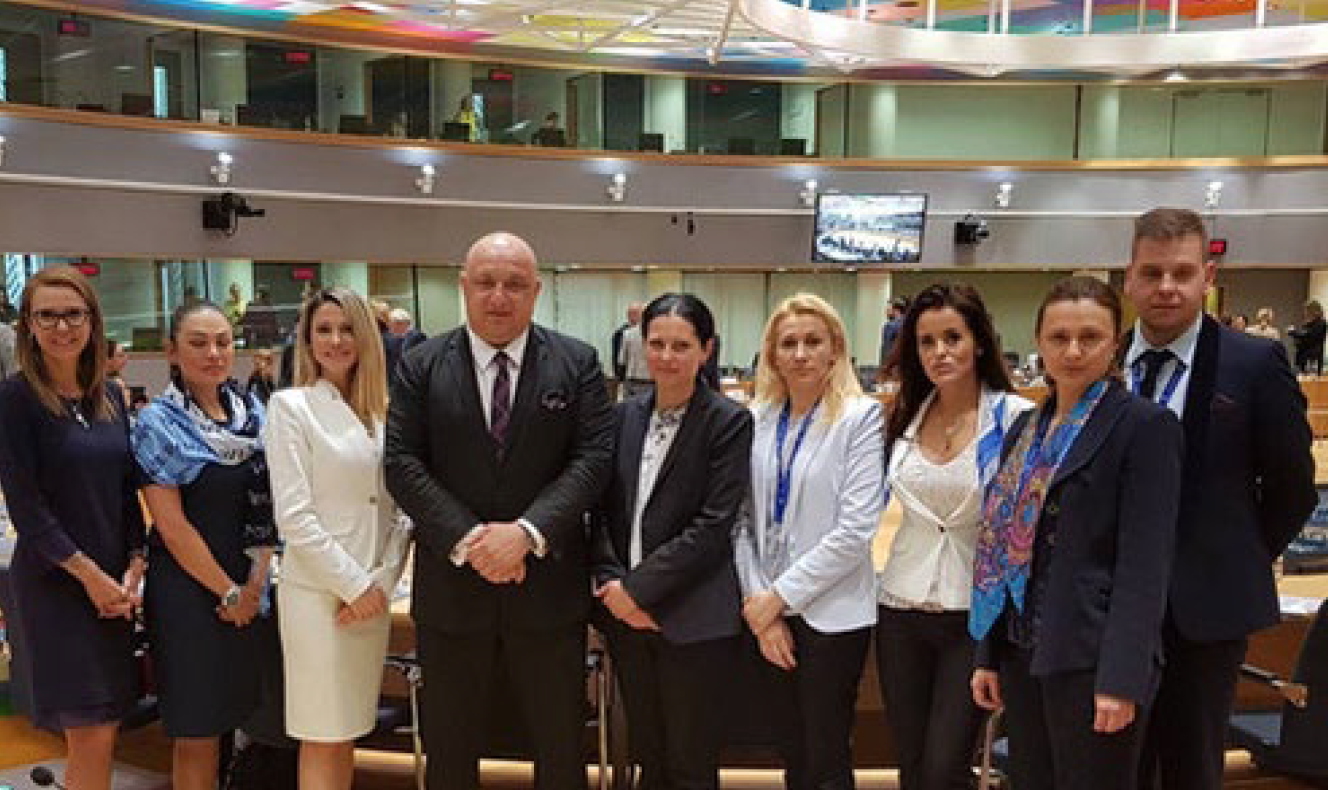
Photo: Viktoria Slavkova private collection
How did you approach the presidency topics and events?
The presidency topics were chosen through initial discussions with the Council and the Commission, ensuring alignment with key priorities in the sports sector. Thematic priorities for our presidency focused on several important issues: promoting European values through sport, combating the manipulation of competitions, and fighting against doping in sport. These topics guided our approach to the presidency and shaped the events and initiatives we organized.
We organized both formal and informal events. Formal events included the DG Meeting, the conference on “Grassroots Sport as a Tool for Integration and a Bridge Between Tradition and Innovation,” and the anti-doping seminar on “Preventing Doping in Professional and Grassroots Sport through Education and Investigation.”
Additionally, we held coordination meetings with several Member States and the European Commission regarding the EU’s position on the review of the WADA Anti-Doping Code. On the informal side, we provided training for our national sports federation to introduce the presidency’s topics and encourage active involvement.
During our presidency, five WPS meetings took place, which were key in advancing discussions and decisions on the relevant topics.
What side events, sports activities, and emotional experiences marked your presidency?
During our presidency, we organized several side events to engage participants and promote the spirit of sport. These included attending the European Women’s Boxing Championships Finals, practicing various sports alongside our main events, and visiting major sports sites. We also shared local culture with a Sofia City Tour, highlighting both the city’s heritage and Bulgaria's sports achievements. Additionally, we organized a football match between the Council Secretariat administration staff and prominent Bulgarian female footballers and referees, which was a fun and engaging way to bring people together.
Alongside the presidency events, participants had the opportunity to practice different sports guided by young athletes, including traditional Bulgarian sports, fostering a hands-on and interactive experience.
The most emotional moment of the presidency was receiving positive feedback from the Commission, the Council, the Member States, and all other stakeholders involved. This recognition affirmed the hard work and dedication put into making the presidency a success.
One of the more challenging situations we faced was selecting and coordinating the invited experts, speakers, and panellists, particularly managing a few last-minute cancellations. Despite these challenges, we managed to adapt and ensure the events proceeded smoothly.
What EU policy papers and documentation were produced during your presidency?
During our presidency, the main document prepared and published was the Conclusions of the Council and of the Representatives of the Governments of the Member States meeting within the Council on promoting the common values of the EU through sport. This document was an important outcome of our presidency and can be accessed through the following link: Conclusions of the Council - EU Values Through Sport
In addition to this, several other documents were produced, such as structured dialogue papers and expert group outcomes, which helped guide the discussions and inform the positions on various sport-related matters within the EU.
Though specific additional documents are not listed, the overall documentation during the presidency contributed significantly to advancing EU policies in sport.
What have been the outcomes and influence of your presidency’s work?
The policies approved during our presidency served as a foundation for the subsequent presidencies, helping shape their topics and priorities. Our work laid the groundwork for the development of EU sports policies in the following years.
At the European level, our Council Conclusions on European Values played a pivotal role in launching the Citizens, Equality, Rights and Values programme in 2021. Additionally, the Anti-Doping Seminar we organized helped strengthen EU Member States' coordination with WADA, leading to the election of an EU country’s representative as the President of WADA in 2020.
On the national level, the presidency's work had a tangible impact. It helped make Bulgaria more visible in international sports structures and contributed to the strengthening of the Ministry of Youth and Sports. Notably, it supported the full independence of Bulgaria’s Anti-Doping Agency from the Ministry of Youth and Sports and the establishment of a National Platform on Preventing Competition Manipulation.
The policy papers approved during our presidency led to key outcomes, including the launch of the Citizens, Equality, Rights and Values programme and the establishment of the National Platform on Preventing Competition Manipulation. These initiatives continue to have a positive influence on both EU and national levels.
Regarding the significance of our presidency topic, values and European identity became one of the most prominent topics in EU discussions in the years that followed, highlighting the lasting impact of our presidency’s focus on these issues. Overall, substantial progress has been made on the presidency topics and the policies we adopted, with significant achievements at both the EU and national levels.